
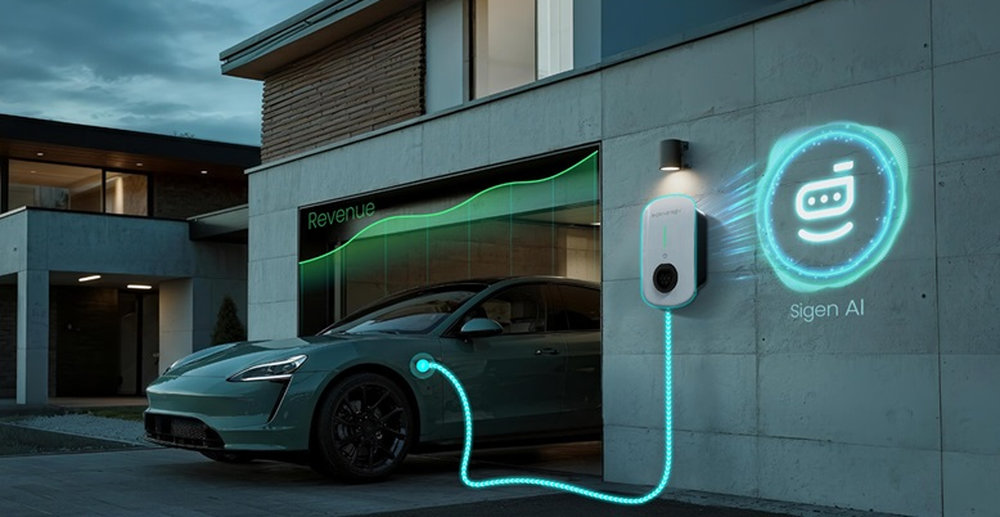
An EV battery can be much larger than a wall-mounted home battery, so the question is natural: if the car can help power the house, does a homeowner still need stationary storage?
Sometimes, yes. A bidirectional EV charger and a home battery overlap, but they are not the same tool. One moves with the driver. The other stays connected to the house all day, every day.
The difference is availability
A bidirectional EV charger lets energy move between a compatible EV and the home or grid. With vehicle-to-home, often called V2H, the EV can support household circuits through approved equipment. With vehicle-to-grid, or V2G, it may export power where a utility program allows it.
A home battery is fixed storage. It can store rooftop solar at noon, discharge in the evening, and stay ready when the EV is away. That boring reliability is exactly why it still matters.
According to the U.S. Energy Information Administration, residential electricity use varies by region, weather, home size, and equipment. A household with electric heating, a well pump, or central air has different backup needs than a small home with mostly essential circuits.
Where the EV shines
The EV can provide a large reserve when it is parked and connected. For a household that wants backup during storms or wants to avoid high evening rates, that can be valuable. It also uses an asset the homeowner already owns.
The limitation is mobility. If the car is at the office during a sunny afternoon, it cannot absorb rooftop solar. If it is away during an outage, it cannot run the refrigerator. If the driver needs a full battery the next morning, the energy system must respect that.
This is where an EV DC bidirectional charger becomes a planning tool rather than just a charging device. Sigenergy’s EVDC materials describe V2H, V2G, and V2X support, which is the category homeowners should study when they want the car to do more than charge overnight.
Where the home battery wins
A stationary battery is better for daily solar shifting. It can fill from the roof while the EV is gone, discharge during evening peaks, and respond quickly to brief outages. It also gives the energy system a stable buffer, which can make load management smoother.
The National Renewable Energy Laboratory often frames solar-plus-storage as a way to move renewable energy into the hours when a building needs it most. That is exactly the job a home battery does well.
An integrated option such as SigenStor’s 5-in-one home energy storage systemaddresses this combined use case by bringing solar inverter, battery components, EV DC charging, and energy management into one system architecture.
When both make sense
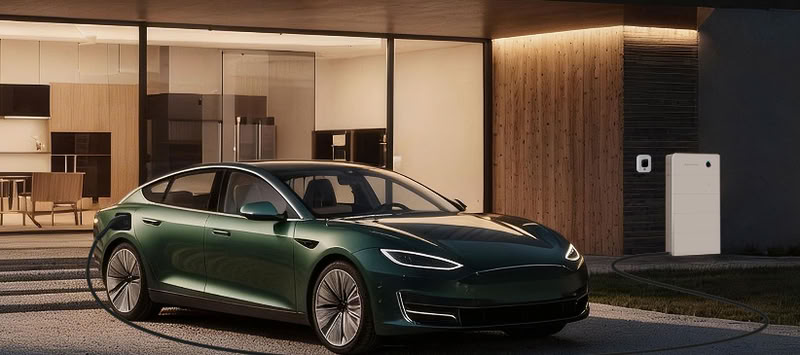
Both technologies can make sense when the home has rooftop solar, time-of-use rates, frequent outages, or major electric loads. The stationary battery handles daily cycling and immediate backup. The EV adds a deeper reserve when it is parked.
Before choosing, homeowners should map three things: which loads need backup, when the EV is usually home, and how local electricity rates reward shifting energy. They should also confirm vehicle compatibility and warranty language before assuming V2H or V2G will be available.
The best answer is not “charger or battery.” It is a system that knows when to use each one. In a well-planned home, the battery can cover the quiet daily work, while the EV provides extra flexibility when the driveway and the house are ready to cooperate. That balanced design is usually easier to live with than asking one device to solve every energy problem.